
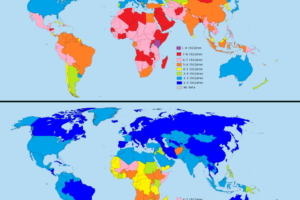
The map above and the videos below show the slow and steady progress of the women’s rights movements over three hundred years.
They are all the work of The Borys on Youtube.
Below you can watch the original video as well as sped up one, followed by a full explanation.
Original Emancipation of women: 1720 – 2023 Vide
Emancipation of women: 1720 – 2023 In 60 Seconds (4X Normal Speed)
And finally here is a full summary of all the data used for the data from this Google Doc.
Explanation of categories:
🟤Women can be legally forced to marry – either by written law, customary law or due to defect in law
🔴Unmarried women are under male (typically father’s) guardianship even after reaching age of majority. They don’t have full civil rights and often need his permission to marry
🟠Unmarried women have civil rights. Married women by law must obey their husbands and don’t have legal capacity to enter into contracts without husband permission
🟡Husband is a head of household and can make decisions about children and makes decisions about shared property and house. Wife only manages her separate property.
🟢Wife and husband have equal rights to manage shared property, equal guardianship rights over children
Sources:
Liberalism and Married Women’s Property Rights in Nineteenth-Century Latin America
https://en.wikipedia.org/wiki/Timeline_of_women%27s_legal_rights_(other_than_voting)
https://en.wikipedia.org/wiki/Forced_marriage
https://ourworldindata.org/grapher/women-required-to-obey-husband
https://ourworldindata.org/grapher/gender-rights-to-property
https://ourworldindata.org/grapher/women-head-of-household-same-as-men?time=2022
Comparative Review of Muslim Family Laws in the Greater Horn of Africa Region (page 45)
https://en.wikipedia.org/wiki/History_of_women_in_Canada
https://en.wikipedia.org/wiki/Marriage_in_Japan
Married Women’s Suretyship Contracts in the United States
Interjurisdictional Competition and the Married Women’s Property Acts
Women and Muslim Family Laws in Arab States
Timeline:
1066: Unmarried women gained legal majority in England upon conquest link
1563: Council of Trent banned forced marriage
18th century: Forced marriage died away in France
1724: Russia banned forced marriage
1734: Sweden banned forced marriages
1753: Russia Married women granted separate economy
1776: Spain requires parents permission to marry: source
1792 France Married women were given a right to share equally in family property
1795: Unmarried women in Netherlands gain legal majority
1804: France rescinded women’s rights
1838: Iowa allowed unmarried women to own property source
1839 Mississippi married women property rights
1850: Wisconsin separate property
Oregon unmarried women can buy land
1855: Massachusetts, Maine separate property
1857: Denmark unmarried women legal majority
UK married women some property
1858: Kansas separate property
1860: New York, Maryland separate earnings
1861: Iceland legal majority for unmarried women
Colorado, Ohio separate property
1862: Homestead Act allowed unmarried women to own property – source
1863: Norway unmarried women legal majority
1864: Finland unmarried women legal majority
1865: Legal majority for unmarried women in Italy
1866: Maine emancipated married women
1867: New Hampshire equal earnings
Portugal legal majority for unmarried women
1868: Mongkut bans forced marriage in Thailand link
1869: Wyoming equal rights
Minnesota equal property, Illinois separate earnings
1870: Argentina unmarried women legal majority
1871: Mississippi allowed women to make legally enforceable contracts link
Nebraska separate property
1872: California, Rhode Island, Pennsylvania separate property
1873: Arkansas equal rights, Nevada, Iowa, Georgia, Delaware right to property
BRITISH COLUMBIA passes the Married Women’s Property Act
1874: New Jersey separate earnings
1875: Missouri separate property
1876: NEWFOUNDLAND passes the Married Women’s Property Act
1877: South Dakota, Connecticut and North Dakota separate property
1878: Oregon married women separate earnings
1879: New South Wales married women can sue, Indiana right to property
1880: Mississippi married women fully legally equal
1881: France unmarried women legal majority
Washington State separate property
1882: Sweden unmarried women legal majority
1883: Tasmania Married Women can sue
Wisconsin separate legal hood
UK: Ireland was still part of the United Kingdom, a wife was allowed to hold property and could enter a contract separately from her husband under MWPA commenced
Oklahoma separate earnings
1884: South Australia (and Northern Territory) married women can sue
Victoria married women can sue
Germany legal majority for unmarried women
Mexico legal majority for unmarried women
Switzerland Legal majority for unmarried women
Ontario also went first with the 1884 Married Women’s Property Act, which gave wives the right to buy their own property (other provinces and territories trickled along in the subsequent decades). “married women were completely emancipated from their husbands’ control both as regards the enjoyment and the disposition of their real estate” source
New Mexico property law
NOVA SCOTIA passes the Married Women’s Property Act
1886: UK law relating to child custody was changed in women’s favor
1887: Costa Rica married women legal majority
Jamaica married women separate property
Montana separate property, South Carolina separate earnings
Alaska separate property
1888: Montenegro: Legal majority for unmarried women
Hawaii equal property rights
Virginia separate earnings
1889: Japan banned forced marriage, Vermont separate earnings
1890: Queensland married women can sue
Norway legal majority for married women. Another law ended the authority of the husband over the wife. The man retained control of the home of the couple
1892: Western Australia married women can sue
1893: France: Legal majority for unmarried, divorced and separated women
West Virginia separate earnings
1894: Kentucky separate property
1895: new Brunswick married women right to property
Nebraska equalized guardianship
https://tile.loc.gov/storage-services/service/rbc/rbnawsa/n5852/n5852.pdf
1896:
Rhode Island equalized guardianship
PRINCE EDWARD ISLAND passes the Married Women’s Property
1897: Utah separate earnings
1899: Iceland and Denmark: Legal majority for married women
1900: Belgium legal majority for unmarried women
The Married Women’s Property Act gives married women in Manitoba
the same legal rights to their property and to control her own wages
and profits as men and legal capacity
1901: Zimbabwe banned forced marriages
1902: El Salvador Legal majority for married women
1903: New Zealand married women legal majority
Prince Edward Island gives married women the same legal capacity as men
1904: Nicragya legal majority for married women
1906: Honduras married women legal majority
Russia: Son no longer under father control source
1907: Saskatchewan gives married women the same legal capacity as men
1911: Portugal: Legal majority for married women
1913: Tennesse repealed coverture: law , North Carolina separate earnings,
Nevada joint parental custody of children
1915: Further equalization women in Hawaii
Idaho separate earnings
1917: Cuba married women legal majority
Mexico married women legal majority
Turkey banned forced marriage
Panama eliminated a husband’s marital authority and secularized marriage source
– B.C. becomes the first province to give mothers the same rights over their children as fathers
1918: Czechoslovakia gave women equal rights
Soviet Russia marriage equality
1920: Sweden Legal majority for married women and equal marriage rights
Estonia married women legal majority
Alabama separate earnings
Cambodia Cambodian Civil Code. To be considered legal, a marriage had to be conducted in the presence of an authorized civil status officer located in the bride’s place of residence. This officer would record the marriage in the marriage register in accordance with the requirement set forth by law
Alberta equalized guardianship rights
1921: Poland marriage equality
Wisconsin all rights equalized – first state in US
Louisiana: Equalizing rights for property rights, right to act as administrator or executor, and power to make contracts and be officers in a corporation.
Delaware: Equalizing rights for property rights and inheritance rights.
Maryland: Equalizing right to hold public office.
Virginia: Equalizing inheritance rights and right to act as administrator or executor.
1922 US Cable Act
Georgia: Equalizing inheritance rights, right to sue and be sued, and conditions for settlement for poor relief.
Kentucky: Equalizing rights of guardianship.
Massachusetts: Equalizing rights of guardianship.
Mississippi: Equalizing rights of guardianship.
South Carolina: Equalizing inheritance rights.
Maryland: Equalizing right to hold public office.
Alberta gives married women the same legal capacity as men
Manitoba equalizes guardianship rights
1923: Full equality of ownership in Iceland
California equalized property rights
Colorado: Equalizing rights of guardianship.
Delaware: Equalizing rights of guardianship, property rights, and inheritance rights.
Florida: Equalizing property rights.
New Jersey: Equalizing rights of guardianship.
New York: Equalizing rights of guardianship, inheritance rights, right to act as administrator or executor, and conditions for making a will.
Ohio: Equalizing rights of guardianship and age of majority.
Pennsylvania: Equalizing rights of guardianship, inheritance rights, right to act as administrator or executor, and conditions for settlement for poor relief.
Tennessee: Equalizing rights of guardianship and inheritance rights.
South Carolina equal guardianship of children
Hawaii women allowed as surety on bonds
Vermont equalized women rights to children
1924: Soviet Mongolia
1925: Denmark equal marriage
South Carolina and Delaware equal right to be sued
California: Equalizing rights of guardianship and right to act as administrator or executor.
Delaware: Equalizing inheritance rights.
New Jersey: Equalizing power to make contracts and be officers in corporation.
Pennsylvania: Equalizing right to act as administrator or executor.
Virginia: Equalizing right to sue and be sued.
UK equal guardianship rights
1926: Turkey The Civil Code of 1926 secures equal rights to women in inheritance, marriage (thereby abolishing polygamy and harems) and divorce
Uzbekistan banned forced marriage
Argentina Married women granted separate economy,[6] legal majority, and the right to employment
Law of Property (Amendment) Act 1926 permitted women to hold and dispose of this property on the same terms as men
New Jersey: Equalizing right to act as administrator or executor and power to make contracts and be officers in a corporation.
District of Columbia: Equalizing power to make contracts and be officers in a corporation.
SASKATCHEWAN equalized guardianship rights
Ontario joint custody
New Zealand equal guardianship rights
1927: Norway marriage equality
Delaware: Equalizing rights of guardianship.
Florida: Equalizing power to make contracts and be officers in a corporation.
Maine: Equalizing rights of guardianship.
Maryland: Equalizing right to act as administrator or executor.
New Jersey: Equalizing power to make contracts and be officers in a corporation.
Laos Modified Civil and Commercial Code of December 1927, as amended by the Ordinance Law No. 247 of August 1965, set forth the laws regarding marriage until December 1990. Marriages had to be carried out in accordance with traditional customs and ceremonies, but also had to be witnessed. The village official was required to prepare and sign a marriage certificate. That document would then be sent to a court to be kept as a record, and a notarized copy would be given to the couple
1928: Albania bans forced marriage
Kazakhstan bans forced marriage
Mexico: Equal marriage law
Kentucky: Equalizing rights of guardianship
Iran published Civil Code banning forced marriage (Article 1070) – source
1929: Finland marriage equality
Alberta married women legal majority
Maryland equalized property rights
Florida equalized property rights
1930: The 1930 Taiwanese Civil Code provided limited rights to Taiwanese women, such as having no right in deciding their residence, the lack of right to own property, the lack of right to file a divorce, the lack of self-protection, and the lack of right to child custody, and discrimination against illegitimate children
India Child Marriage Restraint Act
1931: Spain: Legal majority for married women
1932: Romania married women legal majority
Colombia married women legal majority
1933: Portugal: Legal majority for married women rescinded
Ireland enacts marriage bar
1934: Cable Act amended
1935: Thailand bans polygamy with new law, husband administers property
1938: France Legal majority for married women
1939: Spain Spain: Legal majority for married women rescinded, Nevada women can inherit community property
1940: Australia equalized guardianship laws source
1941: Nova Scotia equal guardianship
1942: Venezuela married women legal majority
1945: Bulgaria, Hungary, Yugoslavia equal rights for women (communism) – source “Socialism removed the props of women‘s earlier legal subordination and equalized the legal status of women and men throughout Eastern Europe. All of the region‘s post-1945 constitutions guaranteed economic, social and political gender equality.”
1946: North Korea marriage equality
Uruguay married women legal majority
1947: Japan marriage equality
1948: Korea South: women gained their legal rights to vote, drive, and own and inherit properties and assets
1949: Ecuador married women legal majority
UK married woman’s restraint on anticipation abolished source
1950: China equalized marriage
1951: Israel Women’s Equal Rights Law of Israel (1951)
1954: Myanmar allowed Buddhist women to marry non-Buddist men link
1956: Tunisia banned forced marriage
Conferring to Section 14 of the Hindu Succession Act, 1956, “Any property possessed by a female, acquired before or after the commencement of the Act, will be held by her as the full owner and not as a limited owner.” As per this law, the woman represents the absolute owner of her property.
Nigeria banned arranged marriages of minors via Nigeria Age of Marriage Law (1956) – source
Netherlands married women legal majority
1959: Iraq banned forced marriage, abolished guardian system
1960: Vietnam banned forced marriage
1962: Brazil married women majority
Mali banned forced marriage
1963: Indonesia women can sue without husband permission
Guatemala married women legal majority
Michigan marriage equality
Nepal banned forced marriage
1964: Quebec: women no longer subjugated to the husband and gave the married woman full legal capacity
1965: Married French women obtained the right to work without their husband’s consent in 1965
Ivory Coast banned forced marriage
1968: Argentina gives married women legal majority
Texas married women legal majority
Equatorial Guinea independence
1969: Portugal married women legal majority
1970: Florida married women legal majority
The paternal authority of a man over his family in France was ended in 1970
1971: Laos removed husband head, Pennsylvania equalized men and women link
1972: Bolivia married women have majority
Luxembourg gave women legal majority
1973: Liberia married women can own property
Liberia removed husband head
Ireland marriage bar in the civil service was ended
1974: Costa Rica removed husband power
South Yemen progressive family law – source
1975: Austria married women majority, removed husband head, don’t need to obey husband
Italy removed husband legal power and head
Forced marriage in Cambodia
Western Sahara independence
1976: Puerto Rico married women separate property, don’t need to obey
Ireland protected houses for women
Belgium give married women equal rights link
Socialist Somalia progressive family law
1977: Until 1977 married women in Germany could not work without permission from their husbands
1978: Portugal legal power repealed and head
Spain unmarried women legal majority
Afghanistan bans forced marriage
Dominican Republic married women can sue and dont need to obey
Sao Tome removed husband head, can own property
1979: Chile married women legal majority
Cambodia no forced marriage
West Germany: reform to parental rights law giving equal legal rights to the mother and the father, abolishing the legal authority of the father
1980:Louisiana removed husband head of household
1981: Spain married women legal majority
Suriname household head equality, married women can own property and dont need to obey husband
Mauritius women can be heads
Quebec marriage equality
Alabama equalized marriage law for men and women link
Head and master laws persisted in Georgia and Oklahoma link
1982: Zimbabwe women can initiate legal proceedings
Cape verde women can be heads and own property
1983: Greece married women can work without husband permission, removed household head
Haiti removed marital power
Sankara bans forced marriage Burkina Faso
1984: Peru married women legal majority
Switzerland married women legal majority
Marriage equality in Netherlands
Oklahoma removed the man as head of household law. Georgia, man no longer leads wife
Algeria banned forced marriage
1986: San Marino removed husband head
Egypt must obey husband
1987: Paraguay women right to sue
Philippines married women majority
1988: Brazil house head equality
Rwand gave married women right to sue
Under the Code married women have full legal capacity to manage their financial affairs
and to enter into contracts
Switzerland removed legal power
DR Congo: Women must obey husband
1990: Ecuador equal marriage, don’t need to obey husband
Chile women don’t need to obey husband
Burkina Faso married women separate property
Cambodia married women can own property
Saint Lucia dont need to obey husband
1991: Laos banned forced marriage, women can own property
1992: Equatorial Guinea women don’t need to obey husband
Paraguay gave women legal majority
Eritrea removes head, don’t need to obey husband
1993: Burundi removed male power/obey husband
1994: Panama removed legal power
Tunisia removed legal power, don’t need to obey husband
Malta women can be heads and own property
El Salvador dont need to obey
1996: Angola gives married women right to sue and removes power
Namibia married women legal majority
1997: Thailand married women have a right to purchase land in their name link
1998: Taiwan married women separate property
C.A.R. married women own property
1999: Ghana banned forced marriage, removed husband power
Nigeria sharia state in northern states
2000: Ethiopia marriage equality, women can own property and don’t need to obey husband
South Africa removed marital power
Taiwan marriage equality
2001: Turkey women separate earnings, removes head
Kenya banned forced marriage link
2002: Nepal unmarried women can own property
Benin women can sue
2004: Mozambique women right to sue, removed head, can own property
Morocco banned forced marriage and removed guardian power
Benin banned forced marriage
Kenya Marriage Act
2005: Algeria married and unmarried women gained legal majority, no legal dominance
Saudi Arabia banned forced marriage
South Korea repealed household head law, women can own property
Botswana repealed marital power, can own property
Benin removed household head
India marriage equality
2006: Lesotho gave women legal majority and removed marital power
DR Congo banned forced marriage
2007: Pakistan banned forced marriage
Sierra Leone banned forced marriage
Togo banned forced marriage
Nepal removed household head, married women can own property
Cameroon prohibits forced marriage link
2008: Madagascar married women can own property
2009: Sierra Leone married women separate earnings, own property
2010: Malawi banned forced marriage – link
2011: Zambia banned forced marriages
2012: East Timor women can be head of household and own property
2013: Ivory Coast married women legal majority
Honduras married women property
2014: Kenya enacted new marriage law, Togo allowed women to work without husband permission – link
2015: Nicaragua removed husband head, can own property
2016: Gambia banned forced marriage
2017: DR Congo women don’t need to submit to husband
2018: Bahrain women can be heads of household and own property
2019: Guinea removed husband as head of household, women can own property
Swaziland abolished marital power
2021: Gabon removed husband power over wife and husband head of household, women can own property, don’t need to obey husband
2022: Zimbabwe equalized marriage law and woman no longer needs permission of family to marry link
What do you think?



Leave a Reply