
Upside-Down Brazil Centred Map From The Brazilian Government

Which Parts Of Europe Are Richer & Poorer Than East Germany In 3 Maps

Map Of Viking Expansion Between 790 & 1066
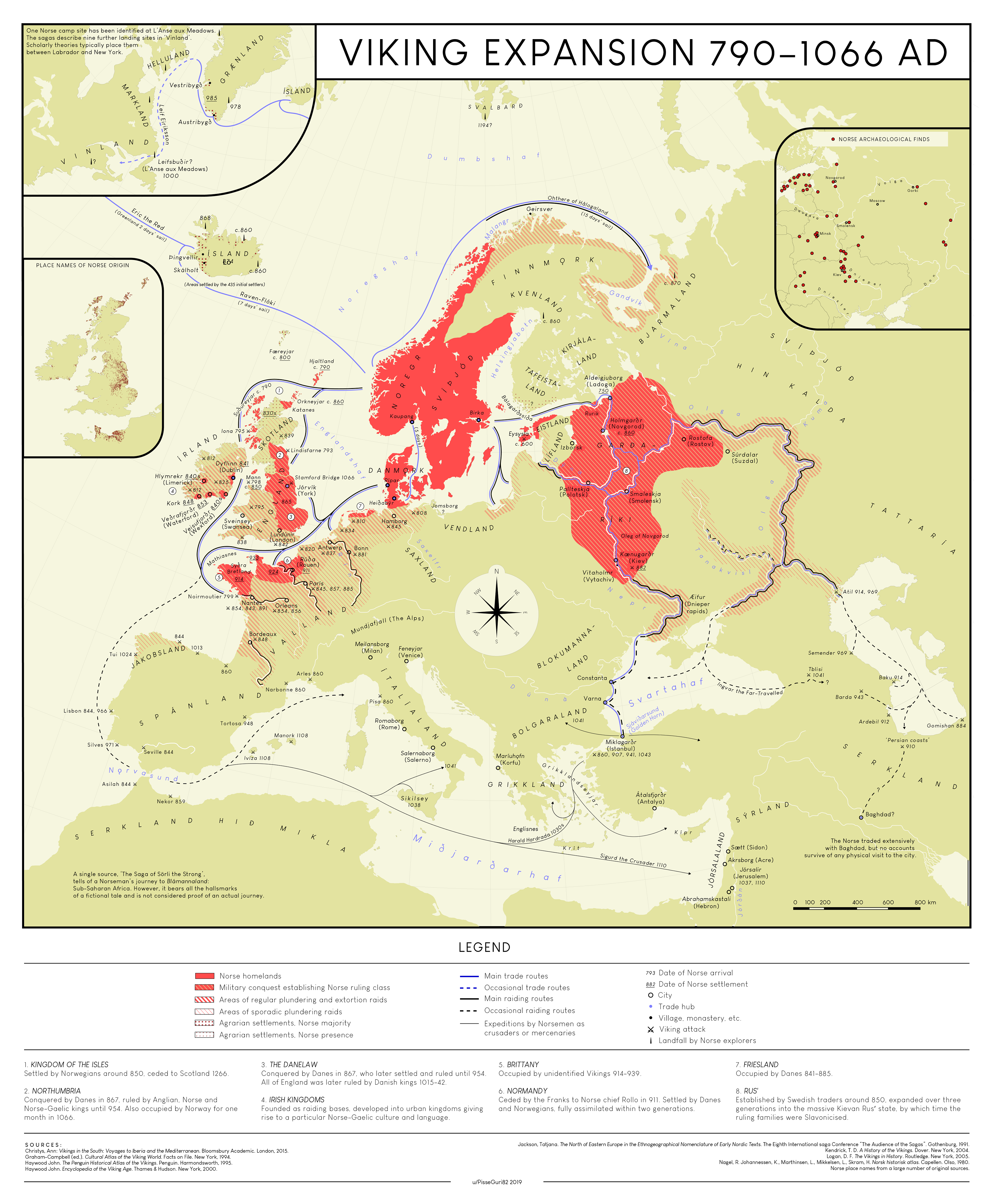 Map created by reddit user PisseGuri82
The map above is a stunningly detailed look at Viking Expansion between 790 and 1066.
Here’s what’s included in the legend:
The 10 Largest Cities in Europe in 2025 (Based On 30km Population Circles)

Do you measure simply based on the city proper? Metropolitan area?
The map above attempts to solve that issue by looking at how many people live with 30km (18.6 miles) of the city centre of each European city. You can quibble that 30km is too much or not enough, but not on the general approach.
Here’s what the author of the map had to say about it:
The Smallest Possible Circles Containing 0.1%-100.0% Of The World’s Population
The video above shows the smallest circle you can make that contains anywhere from 0.1% of the world’s population all the way up to 100% of it.
It comes from reddit user alexmijowastaken who explains that:
Who Wants To Join EU The Most?

More on the sources and pros and cons below:
The US Numbered Highway System In Numerical Order
This video map above shows the numbered highway system in numerical order from Highway 1 all the way to Highway 730.
It excludes the Interstate System.
The video comes from this reddit post, from a user that has since deleted their account.
Here is more about the system and a full list of highways:
What Africa Might Look Like In 10 Million Years

Here’s what’s going on:
What Do The Symbols On Weather Maps Mean?

Here’s a list below:
- « Previous Page
- 1
- …
- 33
- 34
- 35
- 36
- 37
- …
- 159
- Next Page »