
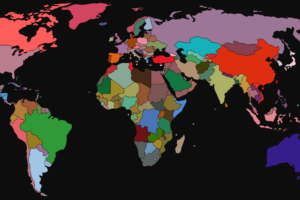
It is designed to resemble a map of the world, with a collection of small, man-made islands representing various countries and continents.
Key Features of The World Islands Project:
- Concept and Design:
- The project was conceived by Dubai’s ruler, Sheikh Mohammed bin Rashid Al Maktoum, and developed by Nakheel Properties, a leading real estate company.
- It consists of around 300 islands that are grouped to mirror the layout of countries and continents on a world map.
- Location and Structure:
- The islands are located approximately 4 kilometers (2.5 miles) off the coast of Dubai.
- The entire development covers an area of about 9 kilometers (5.4 miles) in length and 6 kilometers (3.7 miles) in width.
- The islands are constructed using millions of tons of sand dredged from the Persian Gulf and are protected by a breakwater made from natural rocks.
- Intended Purpose:
- The islands were envisioned for a range of luxury developments including residential homes, resorts, hotels, and entertainment centers.
- Each island or cluster of islands was sold to developers and private buyers for exclusive use, with plans for bespoke resorts and private estates.
- Challenges and Delays:
- Although the project began in 2003, it has faced significant delays due to economic downturns, particularly during the 2008 global financial crisis.
- Many of the islands have remained undeveloped, and construction on several was halted due to financial challenges faced by developers.
- Current Status:
- While some projects, such as the “Heart of Europe” development, have progressed and introduced luxury hotels and resorts, large portions of the islands remain undeveloped.
- There have been concerns about environmental sustainability, erosion of the islands, and viability of the overall project.
- Recent Developments:
- In recent years, renewed interest and investment have been injected into the project, with some new developments being completed and more plans announced for the future.
The World Islands project exemplifies Dubai’s vision of pushing the boundaries in architectural and real estate development. However, it also highlights the challenges of executing such large-scale and experimental projects.






Leave a Reply