
That small strip of land in north-eastern Afghanistan that separates Pakistan from Tajikistan is called the Wakhan Corridor.
More about it below:
What is the Wakhan Corridor?
The Wakhan Corridor is a long, narrow panhandle of Afghanistan:
- Roughly 350 km (220 miles) long
- Between 10-60 km wide
- Located in Badakhshan Province
- Borders Pakistan (to the south), Tajikistan (to the north), and China (to the east)
It’s one of the most remote and least populated regions on Earth.
How did the Wakhan Corridor come about?
The corridor was created in the 19th century during the “Great Game”, the geopolitical rivalry between the British Empire and the Russian Empire in Central Asia.
Key points in its creation:
A Buffer Zone Between Empires
- Britain controlled British India (which included modern Pakistan).
- Russia was expanding southward into Central Asia.
- Both empires wanted a neutral buffer to prevent their borders from touching.
Negotiated Borders
Around 1873-1895, Britain and Russia negotiated:
- Russia agreed that the Pamir Mountains and northern Wakhan would stay under Afghan influence.
- Britain agreed that the area between its territory and Russia would be assigned to Afghanistan.
Afghanistan as a Neutral State
Afghanistan was used as a buffer state between the two great powers.
The Wakhan strip ensured no direct border existed between British India and Russia.
Finalization (1895)
The modern shape of the corridor was fixed in 1895 with the Anglo-Russian Agreement, officially assigning the Wakhan to Afghanistan.
Why it matters today
Because of the Wakhan Corridor:
- Pakistan and Tajikistan do not share a border.
- Afghanistan touches China at the eastern tip (the tiny Wakhjir Pass).
- The region remains extremely isolated and underdeveloped.
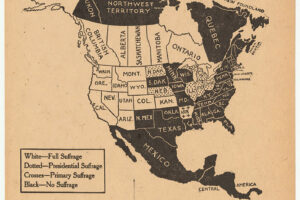
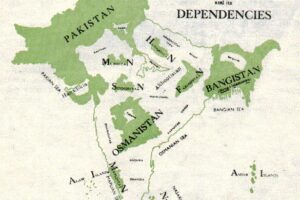
And here’s what the meme would look like in 1908:






zidane says
What really stands out about the Wakhan region is how disconnected it is from the modern world in the best possible way. Travelers talk about long stretches of road where all you hear is the wind and the river, which sounds incredibly peaceful.