
More on the sources and pros and cons below:
The Pros and Cons
Here is a structured overview of pros and cons for countries considering EU membership, viewed from their own perspective and that of the EU itself.
From the perspective of a non-EU country:
Pros:
- Economic Benefits:
- Access to the Single Market, eliminating tariffs, boosting trade.
- Increased foreign direct investment due to market stability.
- Funding and Development Aid:
- Access to EU structural funds, cohesion funds, and development grants.
- Political Stability:
- Greater political influence through membership in a powerful bloc.
- Strengthening democratic institutions and rule of law through required reforms.
- Security and Diplomatic Influence:
- Enhanced national security cooperation.
- Increased leverage internationally through collective EU diplomatic power.
- Free Movement:
- Opportunities for citizens to work, study, and travel freely within the EU.
Cons:
- Loss of Sovereignty:
- Mandatory compliance with EU laws, limiting national decision-making.
- Reduced flexibility in domestic policies (e.g., economic or immigration policies).
- Economic Obligations:
- Contribution to the EU budget, potentially significant economic burden.
- Exposure to financial instability in other member countries (e.g., during financial crises).
- Regulatory Requirements:
- Compliance with extensive EU regulations, possibly costly or politically unpopular domestically.
- Internal Competition:
- Increased competition for local businesses from stronger EU companies.
- Migration Issues:
- Concerns about managing immigration flows or brain drain (citizens moving to wealthier member states).
From the perspective of the European Union:
Pros:
- Market Expansion:
- Enlarging the Single Market, creating economic opportunities for businesses.
- Enhanced Stability:
- Promoting political stability, democracy, and economic reforms in neighboring regions.
- Increased geopolitical influence.
- Security Benefits:
- Strengthening EU external borders and security cooperation.
- Cultural and Demographic Diversity:
- Enriching cultural and demographic diversity.
- Resource and Talent Acquisition:
- Accessing new resources and talent pools, benefiting economies across the EU.
Cons:
- Economic Burden:
- Financial costs from providing structural funds and economic support to less-developed new members.
- Risks of integrating weaker economies or economies with high corruption.
- Decision-making Complexity:
- Expanded membership can complicate decision-making processes, requiring consensus from more countries.
- Internal Cohesion Issues:
- Potential disagreements on fundamental values, migration policies, or democratic norms.
- Security Risks:
- Possible exposure to geopolitical risks or instability of new member states (e.g., tensions with neighbors or unresolved conflicts).
- Public Opinion and Political Costs:
- Existing members’ populations may oppose enlargement due to concerns about migration, economic costs, or dilution of cultural identity.
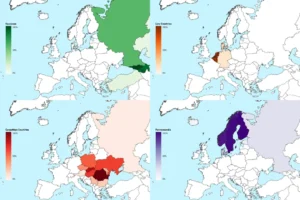
Sources used in the map above.
Albania: Public Opinion Poll in the Western Balkans on the EU Integration – European Western Balkans
Kosovo: Public Opinion Poll in the Western Balkans on the EU Integration – European Western Balkans
Georgia: NDI survey: 83% support Georgia’s EU membership bid
BiH: Public Opinion Poll in the Western Balkans on the EU Integration – European Western Balkans
Moldova: bne IntelliNews – Poll shows rising support for EU membership in Moldova
Turkey: Turkish Perception of European Union 2021
Iceland: Afstaða til veru Íslands í NATO og aðildar að ESB | Þjóðarpúls — Gallup
Norway: Flere sier ja til EU | Resett
Switzerland: Voter analysis: Swiss youth less interested in EU membership






Leave a Reply