
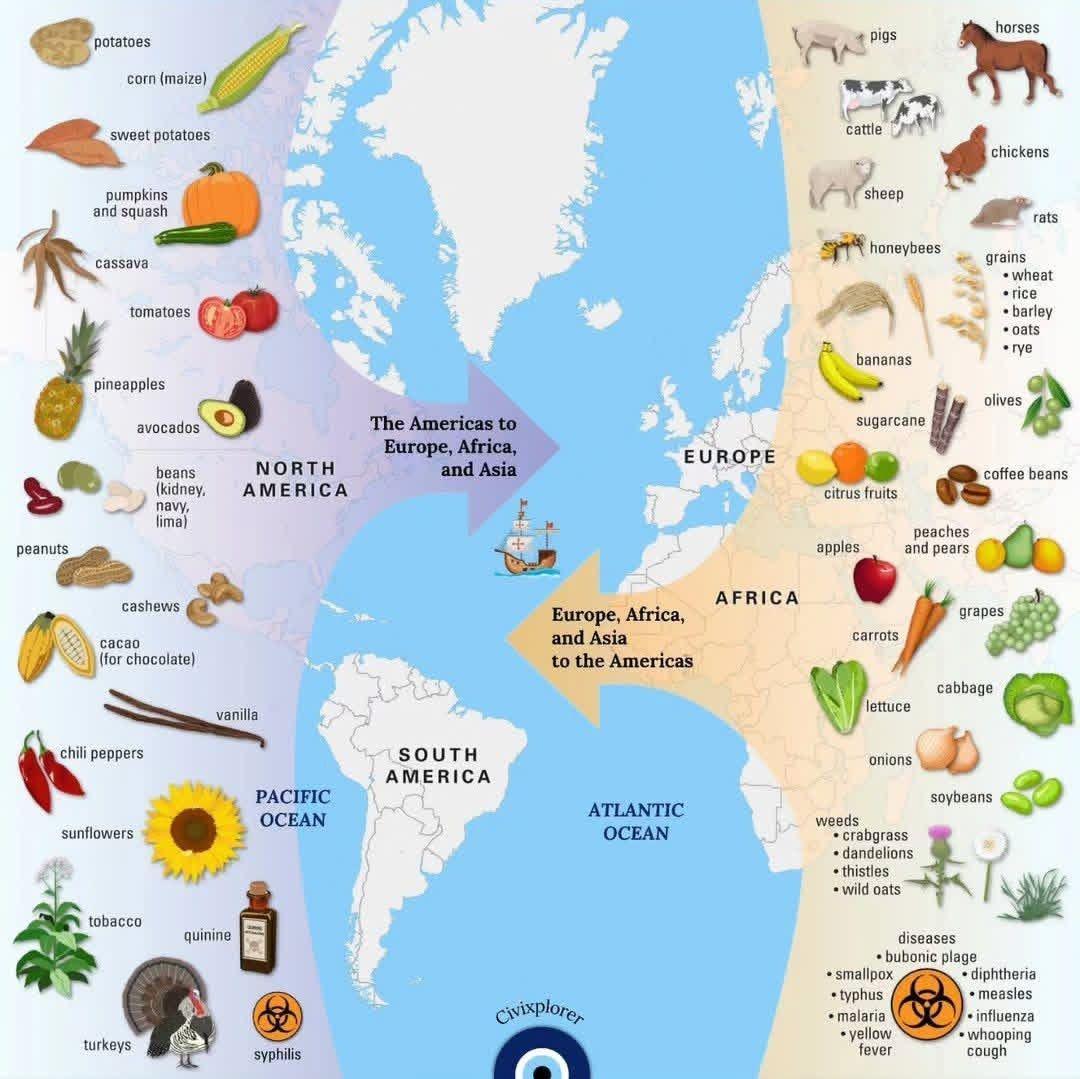
The exchange represents the widespread transfer of plants, animals, culture, human populations, technology, and diseases between the Americas, Europe, Africa, and Asia.
Key Points in the Graphic:
- Items Transferred from the Americas (North and South) to Europe, Africa, and Asia:
- Crops: Potato, Corn, beans, squash, tomato, peanut, cassava, avocado, sweet potato, peppers, pineapple, and pumpkin.
- Livestock/Animals: Turkey.
- Other: tobacco, cacao bean, vanilla, and quinine (a treatment for malaria)
- Items Transferred from Europe, Africa, and Asia to the Americas:
- Crops: Wheat, rice, barley, oats, sugar cane, banana, coffee bean, peach, pear, olive, citrus fruits, grape, onion, and turnip.
- Livestock/Animals: Livestock like cattle, sheep, pig, and horse; honeybee.
- Diseases: Smallpox, influenza, typhus, measles, malaria, diphtheria, and whooping cough.
Significance:
The Columbian Exchange profoundly transformed food and cuisine across all continents, leading to significant changes in diets, agriculture, and culinary traditions.
Here’s how it affected each continent:
The Americas:
- Introduction of European Crops and Livestock:
- Before the Columbian Exchange, the Americas lacked domesticated animals like cattle, pigs, and horses. The arrival of these animals introduced new sources of protein and fundamentally changed agricultural practices.
- Wheat, rice, and barley became staple crops in many regions, especially in North America, influencing the development of bread-based diets and cuisines.
- New Culinary Traditions: European grains and livestock combined with Indigenous crops like corn, beans, and potatoes led to the development of hybrid cuisines, such as dishes that blended European techniques with Native American ingredients.
Europe:
- Increased Variety and Nutrition:
- The introduction of staple crops like potatoes, tomatoes, maize (corn), and beans revolutionized European diets. The potato, in particular, became a crucial food source in countries like Ireland and Russia, leading to population growth and improved nutrition.
- Tomatoes transformed Mediterranean cuisine, leading to dishes like Italian pasta with tomato sauce and Spanish gazpacho. Chocolate (from cacao beans) and vanilla became luxury items and later integral parts of European desserts.
- Expansion of Global Trade: The demand for sugar from the New World led to the establishment of large plantations in the Caribbean, reshaping global trade and cuisine through the widespread availability of sweetened foods.
Africa:
- Introduction of New Crops: Maize (corn), cassava, and peanuts became essential crops in many parts of Africa, where they adapted well to local climates. Cassava and maize, in particular, became staple foods in West and Central Africa, significantly impacting local cuisines and diets.
- Dietary Changes: The introduction of these calorie-dense crops led to population growth in certain regions. Traditional African dishes like fufu and various porridges started incorporating these new ingredients.
Asia:
- Adoption of New Ingredients: Crops like chili peppers, sweet potatoes, and peanuts were introduced from the Americas and quickly integrated into Asian cuisines. Chili peppers, for example, became integral to Indian, Thai, and Chinese cooking, transforming spice blends and flavor profiles.
- Expansion of Staple Crops: The introduction of maize, potatoes, and sweet potatoes in China helped sustain large populations, especially in areas where rice or wheat cultivation was difficult.
General Impact Across Continents:
- Globalization of Ingredients: Foods that were once region-specific became global staples. For instance, Italian, Indian, and Thai cuisines are unimaginable without tomatoes or chili peppers, which originated in the Americas.
- Fusion and Hybrid Cuisines: The blending of indigenous and introduced ingredients led to new culinary traditions. For example, Creole cuisine in the Caribbean is a mix of African, European, and Native American influences.
- Increased Food Security and Population Growth: The introduction of high-calorie crops like potatoes and maize led to better food security in Europe, Asia, and Africa, fueling population booms and the growth of cities.
Here’s another map showing the process:





Tony Glaser says
Items transferred from Europe, Asia, and Africa to the Americas: what about chattel slavery, guns, and syphilis?
seth says
It needs to be kid safe
Seth Doty says
Yo great S.S. but needs more.
Momo Mofu says
Syphilis has been already proved to have an American origin and slavery existed in the continent long before the Europeans arrival. Deal with it.