
The translation reads:
75% of tourists concentrate in 4% of Italian territory
Number of annual tourists in Italian provinces
- Venice (6.5 million tourists in one year)
- Rome (4.9 million tourists)
- Naples (1.8 million tourists)
- Isernia (2,000 tourists in one year)
Source: The European House Ambrosetti on Istat 2022 data
From the original post (translated from Italian):
In Italy, tourism continues to be seen as one of the main sources of wealth: according to a recent analysis by Federmeccanica and Federturismo, economic growth is attributed more to the development of tourism (30.5%, +2.8 compared to the past) than to commerce (16%).
Not only does tourism not account for a third of our economy, but it is also nowhere near evenly distributed.
When tourists choose Italy, they tend to opt for the same few destinations.
This is the case, for example, with Venice, which in 2022, with 6.5 million arrivals, was still the city with the most tourists.
That’s 12% of all arrivals. The problem, however, is that La Serenissima accounts for only 0.1% of Italy’s surface area.
Mass tourism can be a resource, but it is problematic in several ways.
First of all, overtourism contributes to rising property rents, pushes residents out, and reduces urban quality of life. These costs are not reflected in GDP but erode well-being and productivity in other sectors, such as transportation and public services.
On the other hand, it does not create real wealth or quality jobs: according to Istat data, from 2015 to today, prices in the accommodation and food services sector have increased by 21.9%, while wages have risen by only 5%.
Not to mention that 70% of workers in the sector have seasonal and precarious contracts. Compared to 2012, prices have increased by 60%, while wages have remained almost unchanged.
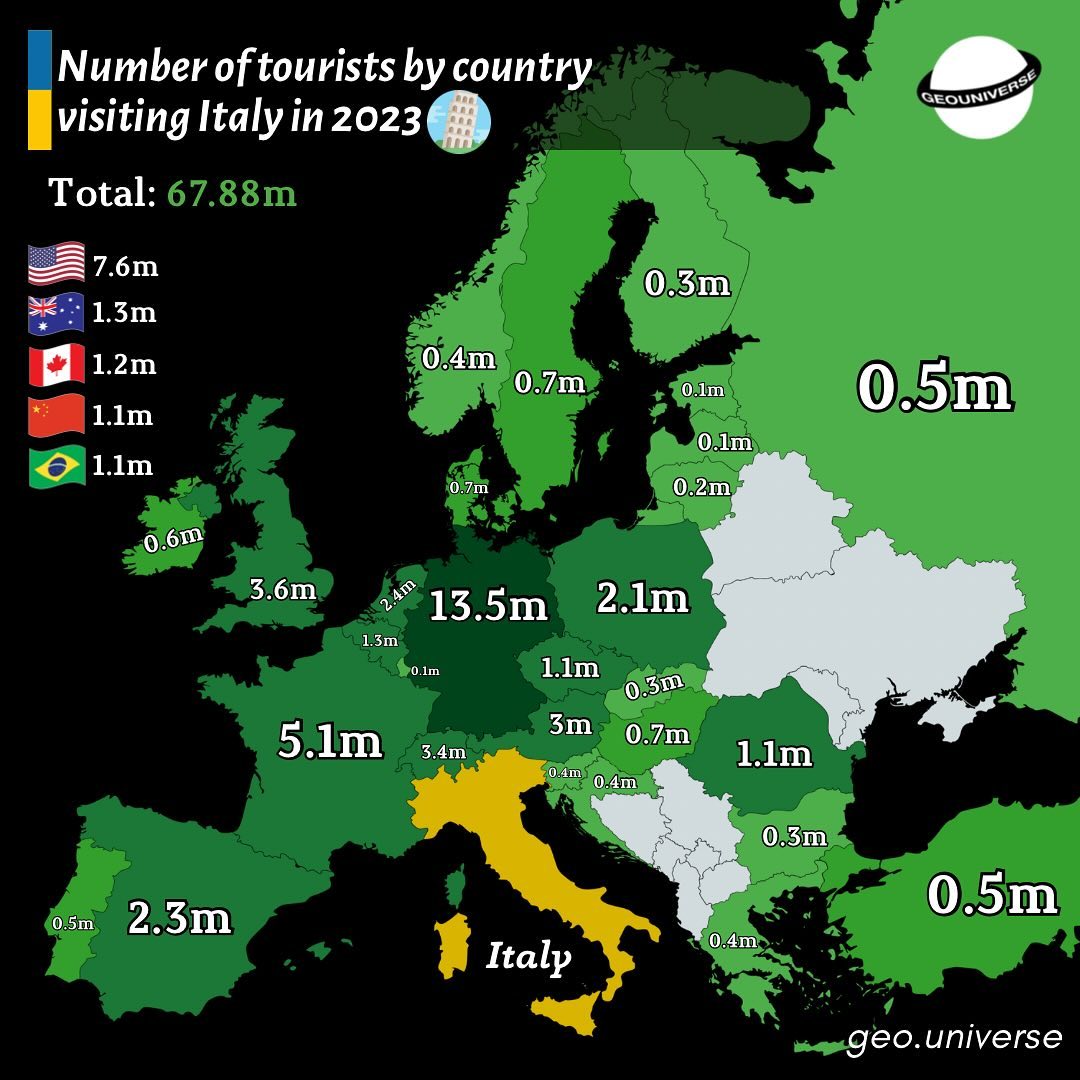
And here’s another map showing Where Tourists to Italy Come From
What do you think of mass tourism?





Leave a Reply