Which US states have the highest and lowest taxes? The table below compares all 50 states plus the District of Columbia on the three big ones: the top marginal state income tax rate, sales tax (both the state rate and the combined state plus average local rate), and the effective property tax rate on owner-occupied homes. Click any column heading to sort. Below the table are three maps showing the standout states for each tax.
Income, Sales and Property Tax by State
Income tax is the top marginal rate on wage income for 2026; a rate of 0 means the state has no income tax. Washington is marked with a dagger because it taxes capital gains income only (top rate 9%) and has no tax on wages. Sales tax figures are as of July 2026; the combined rate adds the population-weighted average of local sales taxes. Property tax is the median annual property tax bill as a percentage of median home value (2024). All figures are percentages.
| # | State | Top Income Tax (%) | State Sales Tax (%) | Combined Sales Tax (%) | Property Tax (%) |
|---|
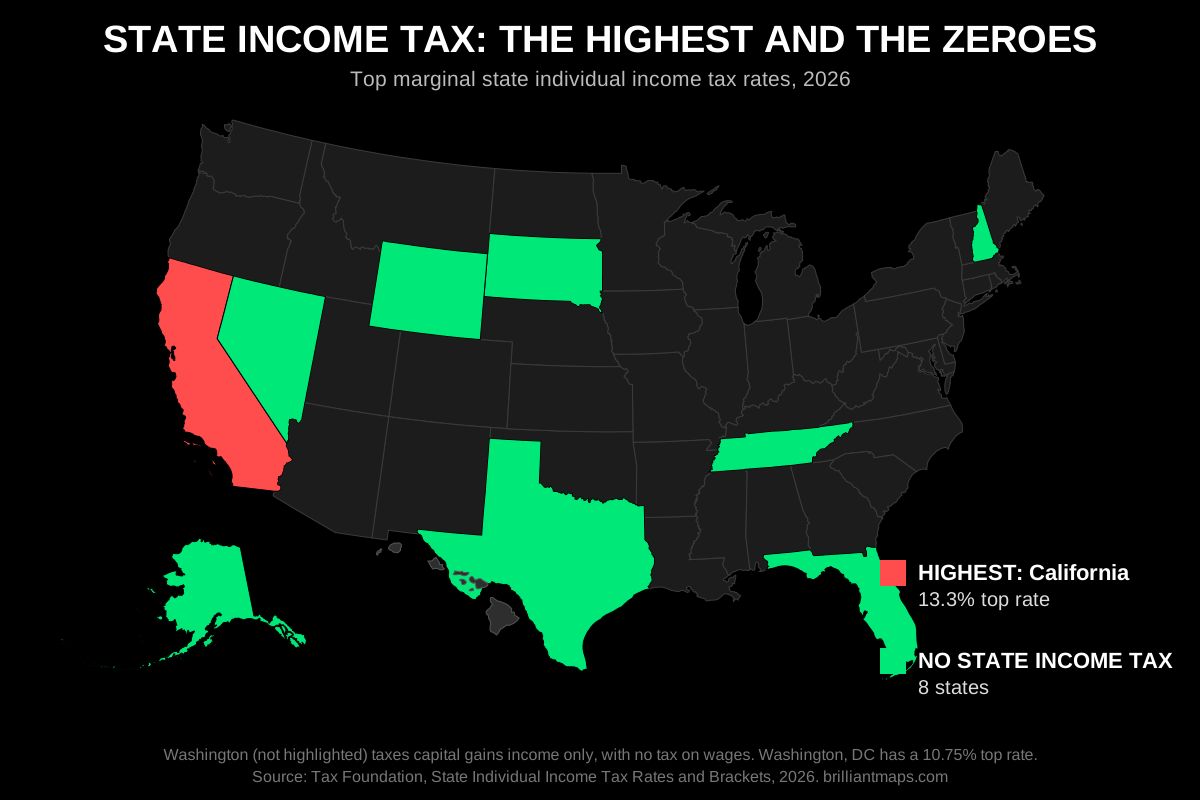
State Income Tax: The Highest Rate and the Zero States
California has the highest top marginal income tax rate at 13.3 percent, while eight states charge no state income tax at all: Alaska, Florida, Nevada, New Hampshire, South Dakota, Tennessee, Texas and Wyoming.
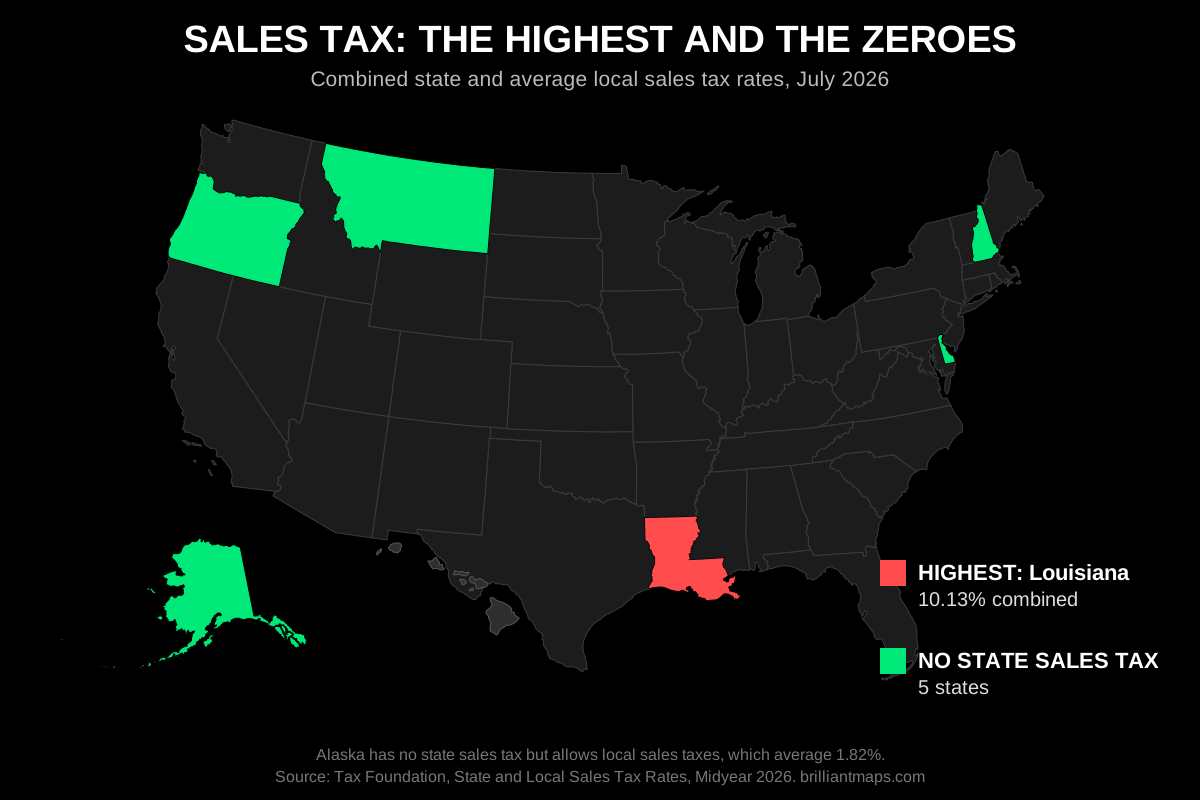
Sales Tax: The Highest Rate and the Zero States
Louisiana has the highest combined state and average local sales tax at 10.13 percent, while five states charge no state sales tax: Alaska, Delaware, Montana, New Hampshire and Oregon. Alaska does allow local sales taxes, which average 1.82 percent.
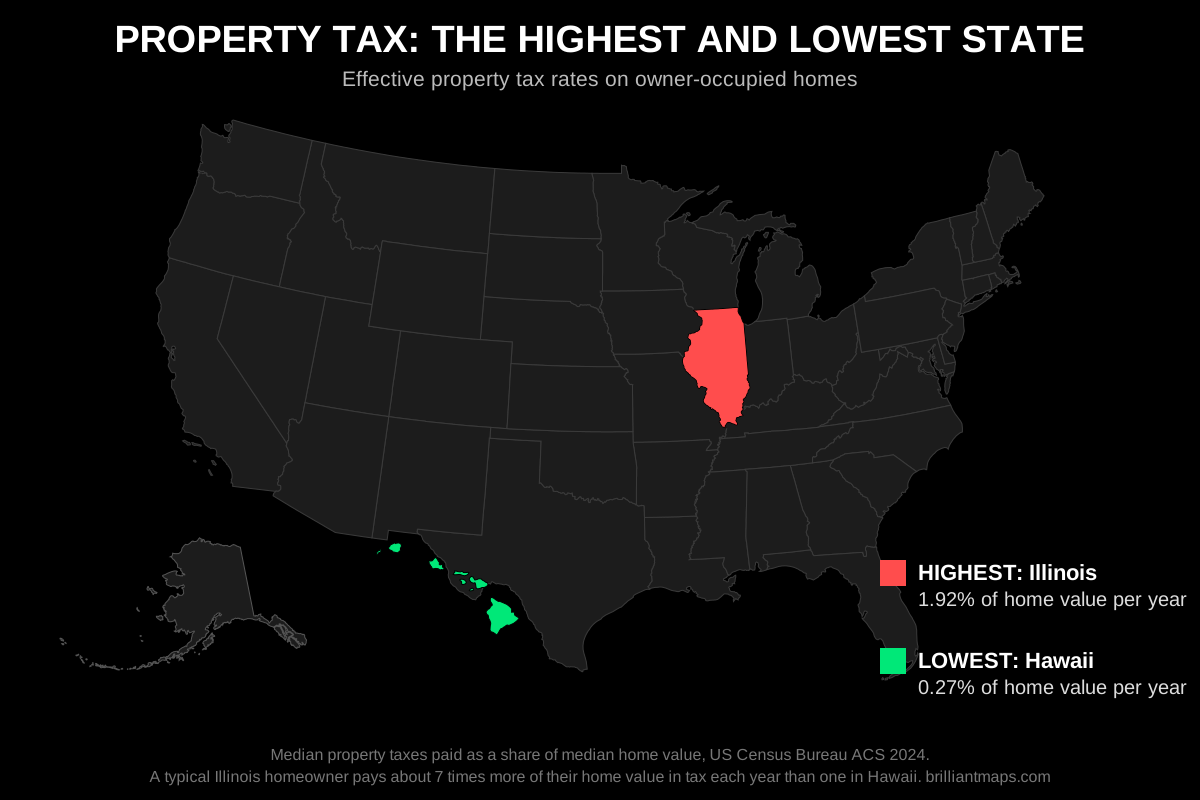
Property Tax: The Highest and Lowest State
Illinois has the highest effective property tax rate, with the median homeowner paying 1.92 percent of their home value each year, narrowly ahead of New Jersey on 1.89 percent. Hawaii has the lowest at just 0.27 percent.
Data Sources and Notes
Income tax rates are top marginal state individual income tax rates as of January 1, 2026, from the Tax Foundation. Local income taxes, which exist in some states, are excluded. Sales tax rates are as of July 1, 2026, from the Tax Foundation; combined rates add a population-weighted average of local rates, and the mandatory statewide local add-ons in California, Utah and Virginia are included in their state rates. Property tax rates are median annual real estate taxes paid divided by median owner-occupied home value, computed from the US Census Bureau American Community Survey 2024 one-year estimates; actual bills vary widely by county, exemptions and assessment rules. Tax rates change frequently and this page may not reflect the latest changes. It is for general reference and educational purposes only and is not tax advice.