The video above shows the entire history of the Vietnam War using Google Earth including troop numbers, casualties and key events from the time.
Here’s more about the conflict.
Here’s a comprehensive overview of the Vietnam War, structured clearly into the background and buildup, timeline of major events, and impact and aftermath.
Background and Build-up: Why the War Happened
The Vietnam War (1955–1975) was rooted in the broader struggle against colonialism, Cold War tensions, and national liberation movements. Its primary causes included:
French Colonialism and First Indochina War (1946–1954)
- France colonized Indochina (Vietnam, Laos, Cambodia) from the late 19th century.
- After WWII, Vietnamese nationalists under Ho Chi Minh resisted the reimposition of French colonial rule.
- The First Indochina War resulted in a French defeat at Dien Bien Phu (1954).
Geneva Accords (1954)
- Vietnam was temporarily divided at the 17th parallel into Communist North (under Ho Chi Minh) and U.S.-backed anti-Communist South (initially under Ngo Dinh Diem).
- Elections planned for reunification in 1956 were never held due to fears of a Communist victory.
American Involvement and Domino Theory
- U.S. policy was guided by the domino theory—fear that if Vietnam fell to communism, the rest of Southeast Asia would follow.
- The U.S. supported South Vietnam financially and militarily, eventually escalating its direct military involvement.
Timeline of Major Events
Early Phase (1955–1964)
- 1955: Ngo Dinh Diem declares himself President of the Republic of Vietnam (South Vietnam).
- 1959: North Vietnam establishes the Ho Chi Minh trail, supplying Communist insurgents (Viet Cong) in the South.
- 1963: Assassination of Ngo Dinh Diem with tacit U.S. support due to his oppressive regime and increasing unpopularity.
Escalation and Major Conflict (1964–1969)
- 1964: Gulf of Tonkin Incident—alleged North Vietnamese attacks lead to U.S. Congress passing the Gulf of Tonkin Resolution, authorizing military escalation.
- 1965: U.S. begins sustained bombing campaign (Operation Rolling Thunder) and deploys combat troops.
- 1968: The Tet Offensive—massive surprise attacks by North Vietnamese and Viet Cong; despite eventual U.S. tactical victory, it significantly damaged American public support.
- 1968: The My Lai massacre, a brutal attack on Vietnamese civilians by U.S. troops, fuels global outrage.
Withdrawal and Ending (1969–1975)
- 1969: President Nixon begins “Vietnamization,” aiming to reduce U.S. troops by shifting responsibilities to South Vietnam.
- 1970–1971: U.S. expands war into Cambodia and Laos, sparking intense anti-war protests in America.
- 1973: Paris Peace Accords—U.S. forces agree to withdraw completely, ending direct American involvement.
- 1975: Fall of Saigon—North Vietnamese forces capture South Vietnam’s capital, marking the war’s definitive end. Vietnam reunifies under communist rule.
Impact and Aftermath
Human and Economic Cost
- Approximately 2 million Vietnamese civilians, 1.1 million North Vietnamese soldiers, 200,000–250,000 South Vietnamese soldiers, and 58,000 American soldiers died.
- Extensive damage to infrastructure and environment due to intense bombing and chemical warfare (e.g., Agent Orange).
Political and Social Consequences in the U.S.
- Deep political divisions emerged in American society; the war triggered large-scale protests, influencing U.S. policy and cultural attitudes for decades.
- Resulted in widespread mistrust toward government institutions and contributed to significant changes in foreign policy and military engagement strategies.
Vietnam After the War
- Vietnam faced significant economic difficulties due to war damage, a U.S. economic embargo, and ineffective centralized economic policies.
- Hundreds of thousands fled Vietnam (“boat people”) leading to global refugee crises.
- Gradual normalization of diplomatic relations between Vietnam and the United States began in the 1990s, culminating in formal diplomatic relations in 1995.
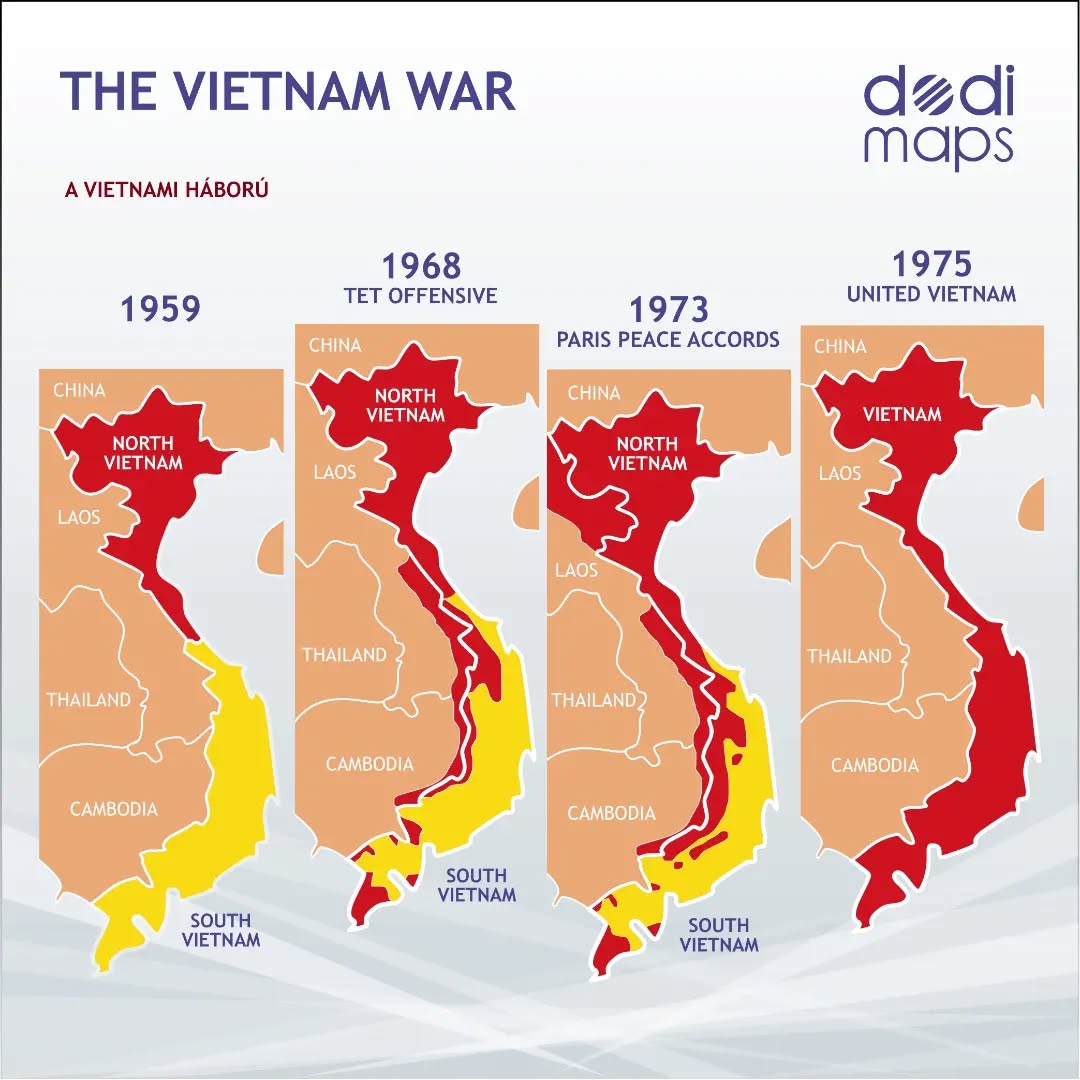
Vietnam War In 4 Maps
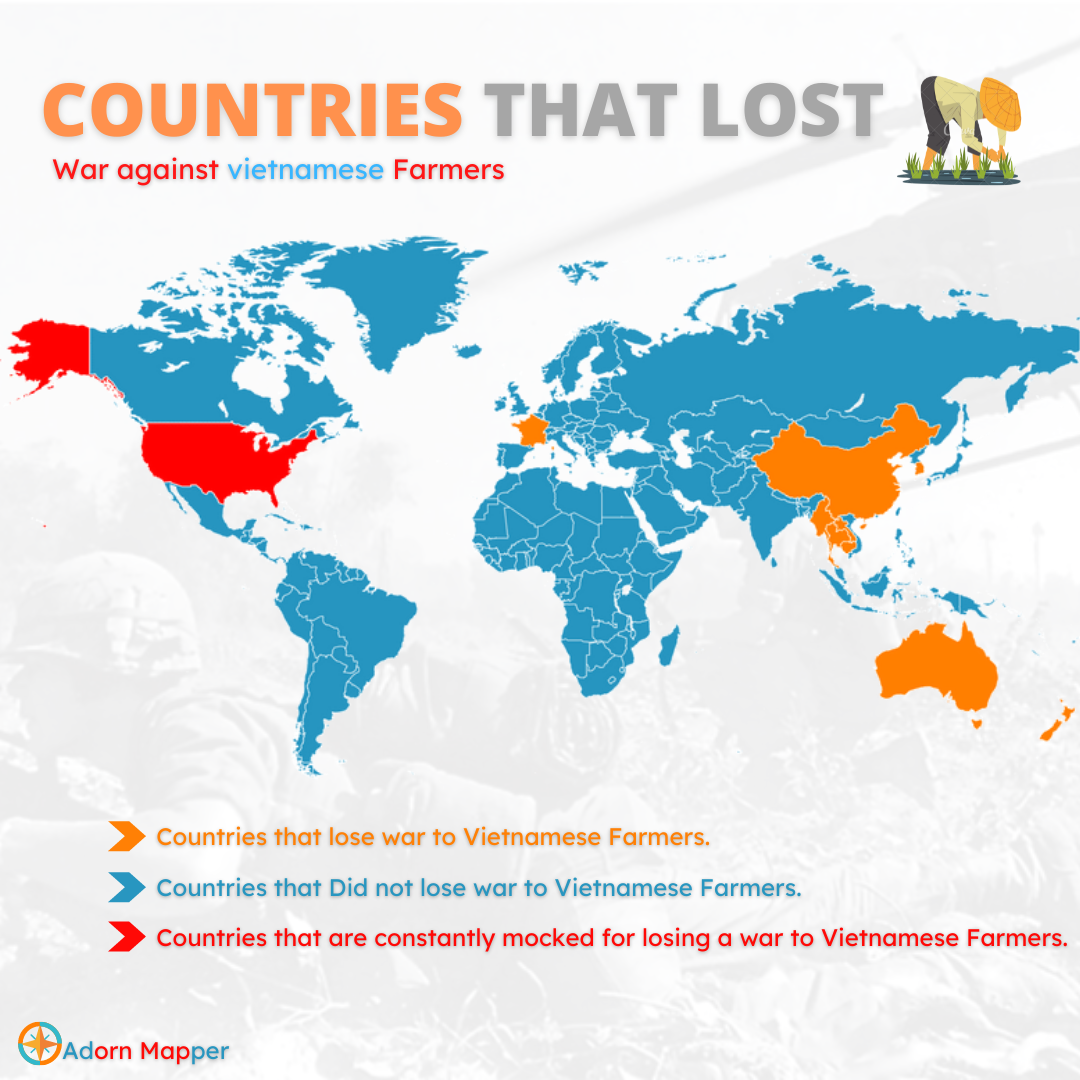
and finally there is this humorous map from Adorn Mapper.
What do you think about the conflict?


Leave a Reply